Tag Archives: #hurricane

Hello Irma part 1

I rode out my first hurricane in Orlando, waiting for it to pass so we could get to work. It was also the first time I would actually be paid to help in a disaster response.

I flew into Tampa four days before Hurricane Irma was expected to make landfall on Florida’s west coast. Irma was massive—one of those storms you knew would cause damage no matter where she hit. For three days, my job was staging incoming rigs arriving from all over the country—and even Canada. Bucket trucks, pickups, heavy equipment—everything you could imagine rolled in. All of the Orlando staging was at Epcot, and coordinating that volume of equipment was no small task. Still, the drivers and crews were patient and easy to work with.

That’s where I met Donald Carter—DC—the lead for PowerSecure. I also met several crews from Florida Power & Light. DC and I hit it off immediately, and before long, I became a go-to person. If something needed to get done, they knew my crew and I would handle it.
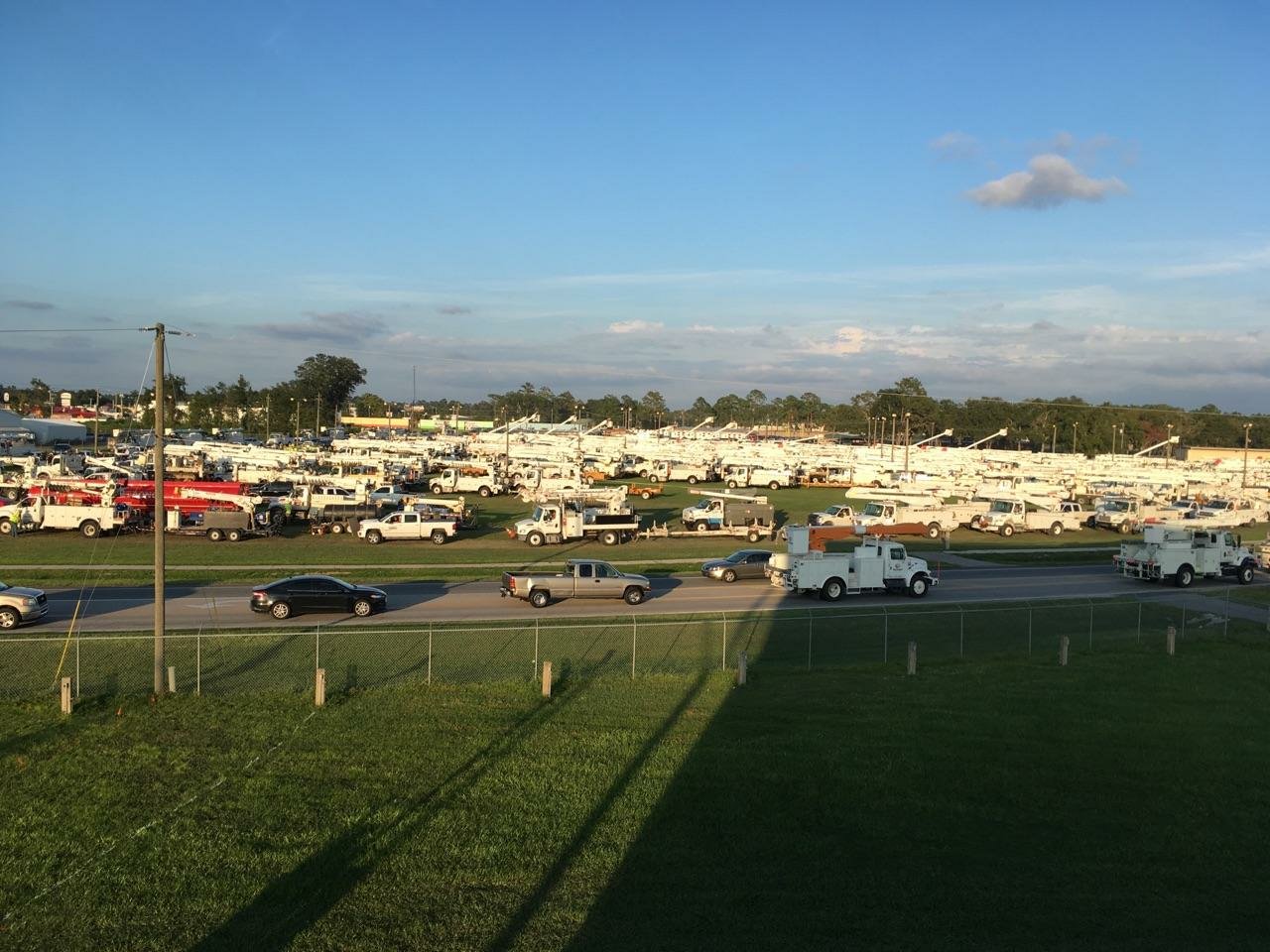
So many trucks:)

Day 0 was landfall. I was staying at the Hilton, thankfully equipped with hurricane-rated windows. The worst of the storm came through overnight, and by morning the winds had dropped to around 50 mph. We headed to Epcot early. The mission was clear: fuel the fleet.

By 7 a.m., we began lining up more than 600 diesel trucks and nearly the same number of gasoline vehicles. Fuel trucks were on site by 9 a.m., but the refueling crews hadn’t yet been released due to wind conditions. Food, water, and fuel were delayed that first morning, but the issues were resolved fairly quickly. Around noon, fueling finally began.

Everyone was understanding and eager to get fueled and deployed to rally points across the state.

While reviewing the fuel logs, I asked the fueling team if we had enough fuel to finish. I was told, “We should be fine.” That wasn’t good enough. I needed certainty. The only way to be sure, they said, was to physically measure the tanks.

I reviewed the logs, estimated the remaining fuel needs—about 26 gallons per truck—and quietly called my FPL point of contact to come to the site. This wasn’t information you shared over the radio. If drivers thought fuel might run out, frustration would spread fast. I also had one of my crew get an exact count of remaining trucks.

The numbers came in: 132 trucks left. Available fuel: about 1,400 gallons.

I told the FPL logistics supervisor that, based on estimates, we would run dry with roughly 75 trucks still waiting. We were fueling fast with two lines, so we needed more fuel immediately. A refuel tanker was about 30 minutes out, and she made the call to bring it in.

Right after that decision, we dropped to one fueling line and began drawing from the last tank. That slowdown bought us time. And in a moment I’ll never forget, the final tank ran dry just as the refueler finished filling one of the tanker’s empty compartments. Perfect timing.

I counted again—81 trucks left.

Here’s the takeaway: my job description didn’t say “prevent a fuel failure.” There was no SOP manual for that moment. I was told to manage fueling and log it. That was it. But I understood what it meant if those trucks didn’t roll—power restoration would be delayed, possibly affecting hundreds or thousands of people.

When you’re part of a team, your role—no matter how small it seems—matters. The ripple effect of doing (or not doing) your job can be far bigger than you realize.

I was thanked for going above and beyond, and several FPL supervisors passed my name up the logistics chain. DC also shared my efforts with PowerSecure leadership. Later that evening, DC received an email requesting that my team relocate immediately from Orlando to West Palm Beach. That was the site of FPL main distribution center and operations HQ.

It was 7 p.m. I had to gather the team, check out, eat, and hit the road for a 2–3 hour drive. We arrived just after 11 p.m.

Day 1 would begin in the morning.

The Harvey Wallbanger

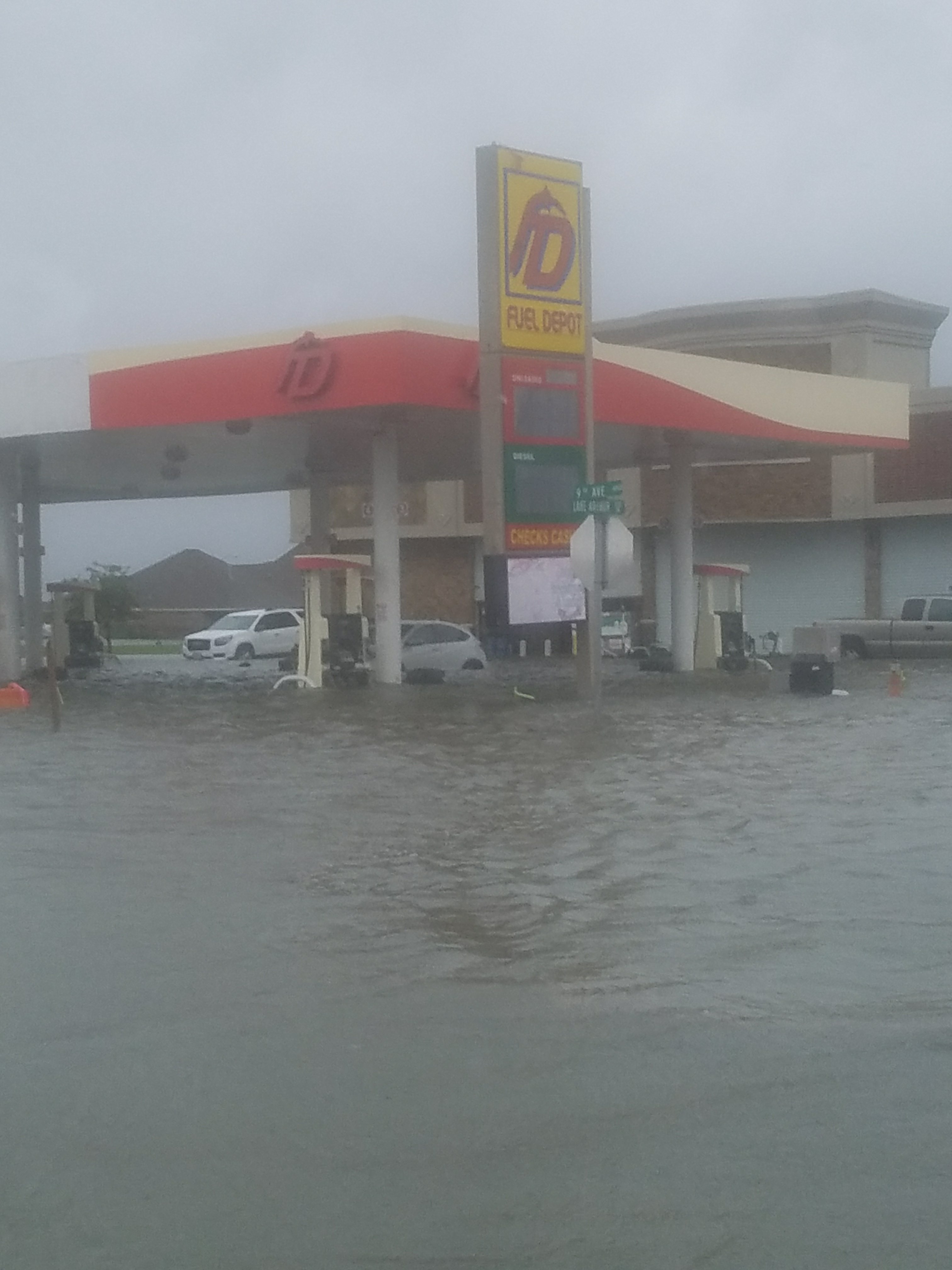
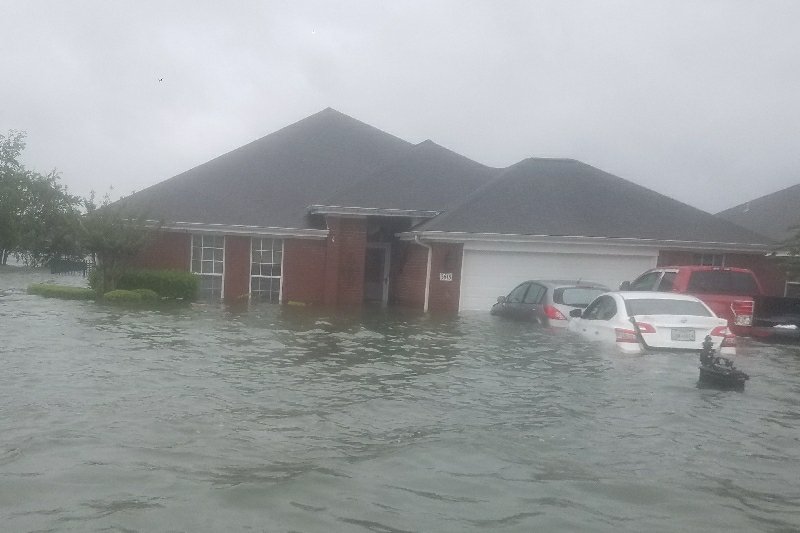
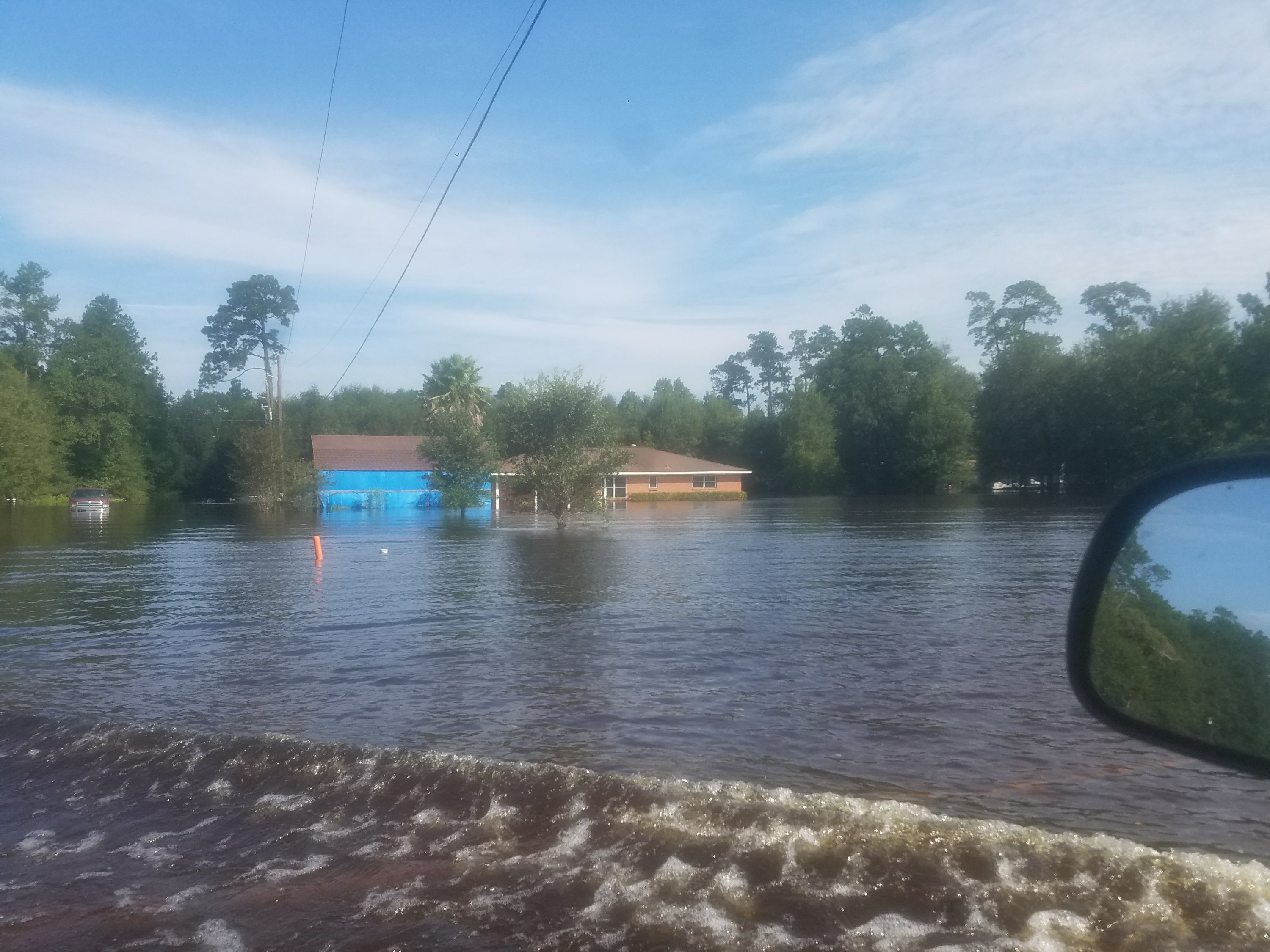
This Harvey wasn’t something you pour into a highball glass—though he left one hell of a hangover. This was Hurricane Harvey, relentlessly pounding the Houston area for days.

As I watched Harvey form and heard he would stall over Houston, Corpus Christi, and the surrounding areas, I wrestled with the decision to go help. After a full day of debating—mostly with myself—I knew the answer. Ellen and I talked about it that Monday at the office. She knew. I knew. I needed to go.

I left Tuesday mid-morning, drove to Dallas, caught a few hours of sleep at my friends Rich and Monica’s place, then hit the road again around 1 a.m. That put me in Houston around 5 a.m. The only question left was: where exactly should I go?

I’ve learned that when I do this kind of work, I’m usually pointed in the right direction—call it God, fate, the universe, or dumb luck. About two hours outside Houston, I tuned into the North Houston rescue channel on Zello. I heard Port Arthur and Beaumont were getting hammered, with water rising fast. I punched Port Arthur into the GPS and headed east.

An hour outside Beaumont, I spotted two trucks hauling flat-bottom boats. Something told me to follow them. They pulled into a gas station for diesel, and I introduced myself. The older man was Jimmie. He ran a pizza oven cleaning business in Houston, and the younger driver was his son-in-law. They were headed to Port Arthur. I asked if I could tag along and help. It was 5 a.m., and we needed to move fast.

Two routes were flooded out completely. The third got us there—pushing through nearly two feet of water. Zello helped us navigate, and we launched from a Walmart parking lot.

Port Arthur Rescues

As Jimmie prepped the boats, I grabbed my medical bag and rope. We launched, and I took on the job of comms—listening for the highest-priority calls. Our first rescue was a family floating in an inflatable swimming pool, two men pulling it through floodwater. We loaded the entire family—pool included—into the boats and got them to safety.

“Where to next?” Jimmie asked.

I scanned addresses and routed us toward multiple high-water calls. Along the way, we ran into the Coast Guard trying to access a senior housing complex called Legacy Senior Housing. Water there was waist- to chest-deep. The concern was immediate: elderly residents, some possibly fallen or wheelchair-bound.

Jimmie and I started door to door, wading through the water, knocking and calling out. At one unit, the door was open but the screen locked. As we were about to force entry, an elderly man emerged. Across the way, I noticed a flicker of light behind blinds in another unit.

I crossed the flooded “parking lot” and knocked. I heard a faint sound. The door was unlocked.

Inside sat an elderly woman in a battery-powered wheelchair, stranded in the middle of the room. She had been there for about 13 hours. If the water had risen another foot, she wouldn’t have survived.

I yelled for Jimmie. We’d need help. Within minutes, three Coast Guard members arrived. Together, we lifted this woman—carefully—into a 14-foot flat-bottom boat. She insisted we take her wheelchair too. I argued—it was another 100 pounds—but she wouldn’t leave without it. So we loaded it.

I took lookout at the bow. As I tried to see past her, I barely caught a submerged brick mailbox dead ahead. I yelled and reached out—but we hit it just off center. The boat lifted, twisted, and I lunged forward, grabbing the woman and throwing my weight over the side to counterbalance.

I remember thinking, If we flip, I’m not letting her drown.

The motor shut down. We slid off the mailbox and leveled out.

“Well,” I said, breathing hard, “that was close.”

Jimmie shrugged—no words needed. We got everyone safely to dry land.


Nursing Home Evacuation

On another run to Legacy, we were asked to transport a woman and a sheriff to Cypress Glen Nursing Home. Management initially refused to evacuate residents—likely due to liability. That changed when the sheriff arrived.

The place smelled of urine and feces. There were 50–100 residents. Some could move with assistance; others were bedridden and had to be evacuated on mattresses into larger boats and fan boats.

As Jimmie ferried residents out, I stayed behind—lifting, assisting, and marking cleared rooms with white medical tape. And yes, we rechecked them. Again and again.

By dusk, we were done. Exhausted. Hungry. We loaded the boats, said our goodbyes, and I finally ate a peanut butter sandwich next to my truck.

Beaumont and Beyond

I headed to Beaumont to drop supplies at a church, ate dinner, and tried to push farther out—but flooded roads stopped me. I slept in my truck at Triumph Church.

At dawn, water had risen again. Zello chatter pointed to Vidor, Texas. I headed there—nearly drowning my truck in the process. Every open gas station or dollar store meant more diapers, formula, and dog food. I spent nearly $2,000—offset by $1,520 raised by friends and family.

Most of the day was spent ferrying people across flooded streets and helping smaller vehicles reach Highway 10. When my truck took water up to the headlights, I knew they wouldn’t make it without help.

That night, I parked at an LDS church and tried to sleep. Around 1 a.m., I got texts from a contractor—one of my guys had been stealing. From him. From me. From a tenant. That was it.

I knew I’d be back to Houston. But I also knew I had to deal with this immediately.

So I headed for Kansas City. Twelve hours on the road. I rolled in around 3 p.m.

There was more work to do. There always is.

Thanks for reading—and always meet new strangers… unless their name is Harvey.