I rode out my first hurricane in Orlando, waiting for it to pass so we could get to work. It was also the first time I would actually be paid to help in a disaster response.
I flew into Tampa four days before Hurricane Irma was expected to make landfall on Florida’s west coast. Irma was massive—one of those storms you knew would cause damage no matter where she hit. For three days, my job was staging incoming rigs arriving from all over the country—and even Canada. Bucket trucks, pickups, heavy equipment—everything you could imagine rolled in. All of the Orlando staging was at Epcot, and coordinating that volume of equipment was no small task. Still, the drivers and crews were patient and easy to work with.
That’s where I met Donald Carter—DC—the lead for PowerSecure. I also met several crews from Florida Power & Light. DC and I hit it off immediately, and before long, I became a go-to person. If something needed to get done, they knew my crew and I would handle it.
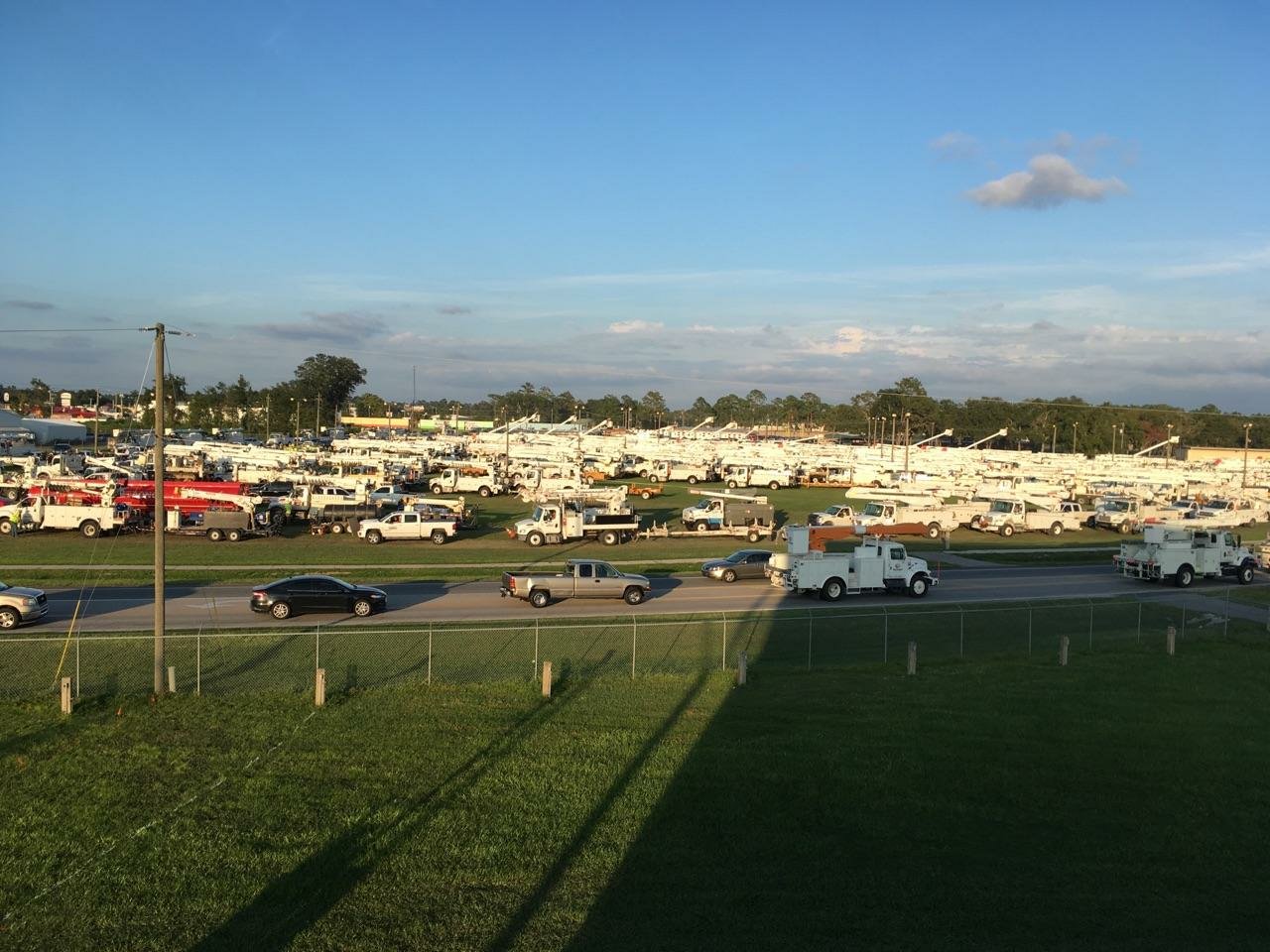
Day 0 was landfall. I was staying at the Hilton, thankfully equipped with hurricane-rated windows. The worst of the storm came through overnight, and by morning the winds had dropped to around 50 mph. We headed to Epcot early. The mission was clear: fuel the fleet.
By 7 a.m., we began lining up more than 600 diesel trucks and nearly the same number of gasoline vehicles. Fuel trucks were on site by 9 a.m., but the refueling crews hadn’t yet been released due to wind conditions. Food, water, and fuel were delayed that first morning, but the issues were resolved fairly quickly. Around noon, fueling finally began.
Everyone was understanding and eager to get fueled and deployed to rally points across the state.
While reviewing the fuel logs, I asked the fueling team if we had enough fuel to finish. I was told, “We should be fine.” That wasn’t good enough. I needed certainty. The only way to be sure, they said, was to physically measure the tanks.
I reviewed the logs, estimated the remaining fuel needs—about 26 gallons per truck—and quietly called my FPL point of contact to come to the site. This wasn’t information you shared over the radio. If drivers thought fuel might run out, frustration would spread fast. I also had one of my crew get an exact count of remaining trucks.
The numbers came in: 132 trucks left. Available fuel: about 1,400 gallons.
I told the FPL logistics supervisor that, based on estimates, we would run dry with roughly 75 trucks still waiting. We were fueling fast with two lines, so we needed more fuel immediately. A refuel tanker was about 30 minutes out, and she made the call to bring it in.
Right after that decision, we dropped to one fueling line and began drawing from the last tank. That slowdown bought us time. And in a moment I’ll never forget, the final tank ran dry just as the refueler finished filling one of the tanker’s empty compartments. Perfect timing.
I counted again—81 trucks left.
Here’s the takeaway: my job description didn’t say “prevent a fuel failure.” There was no SOP manual for that moment. I was told to manage fueling and log it. That was it. But I understood what it meant if those trucks didn’t roll—power restoration would be delayed, possibly affecting hundreds or thousands of people.
When you’re part of a team, your role—no matter how small it seems—matters. The ripple effect of doing (or not doing) your job can be far bigger than you realize.

I was thanked for going above and beyond, and several FPL supervisors passed my name up the logistics chain. DC also shared my efforts with PowerSecure leadership. Later that evening, DC received an email requesting that my team relocate immediately from Orlando to West Palm Beach. That was the site of FPL main distribution center and operations HQ.
It was 7 p.m. I had to gather the team, check out, eat, and hit the road for a 2–3 hour drive. We arrived just after 11 p.m.
Day 1 would begin in the morning.













 Hello Stranger